
Fracture & Stress Analysis
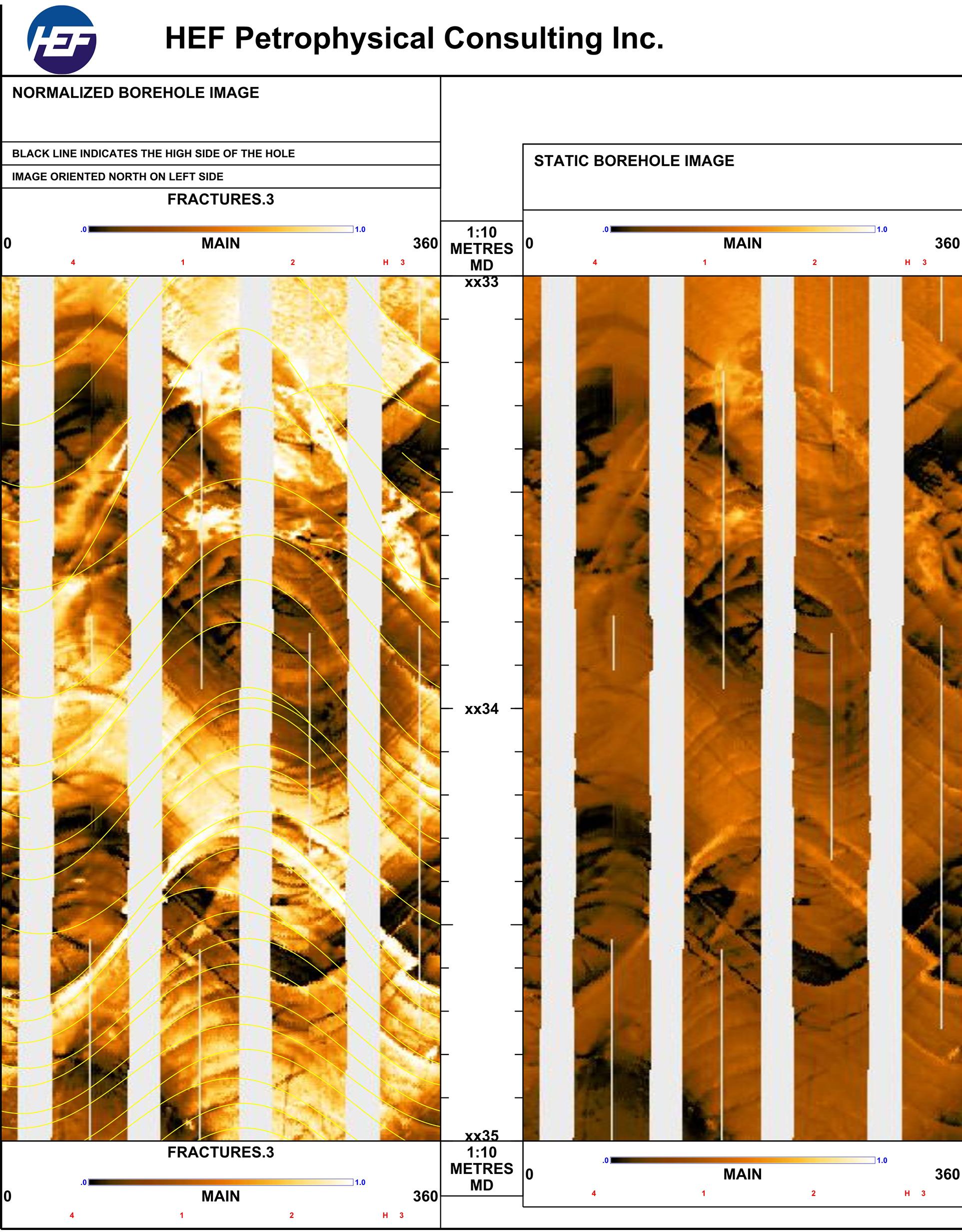
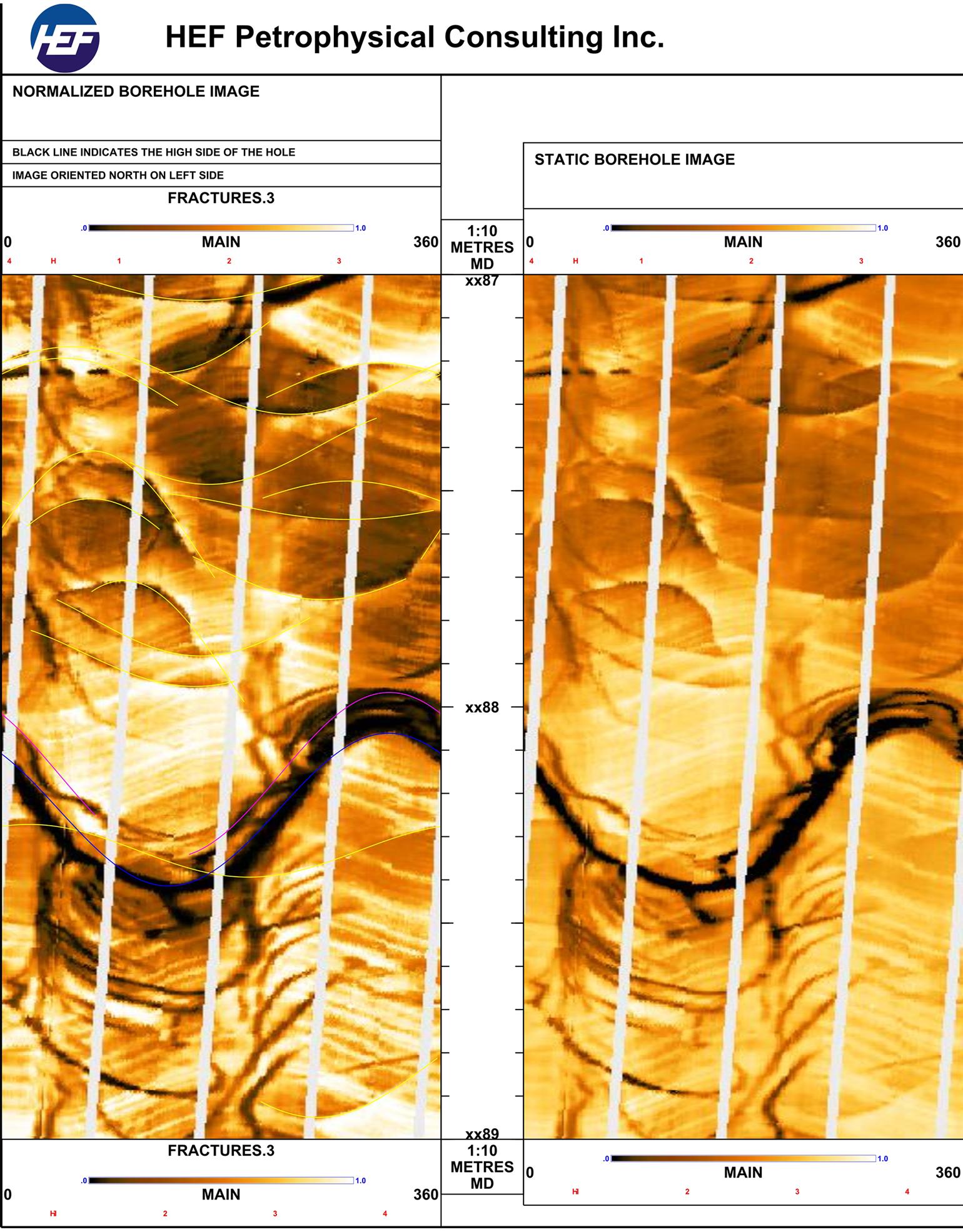
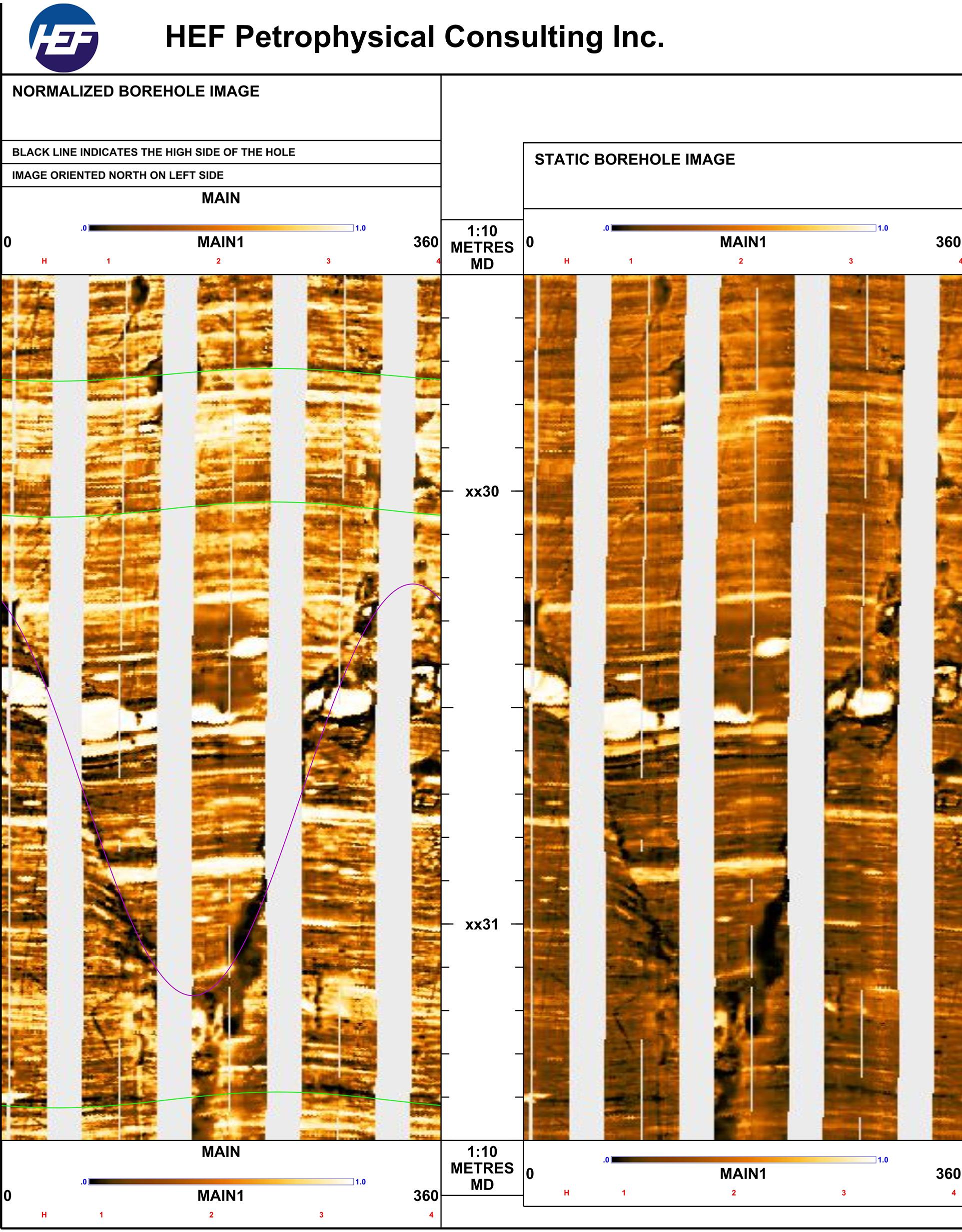
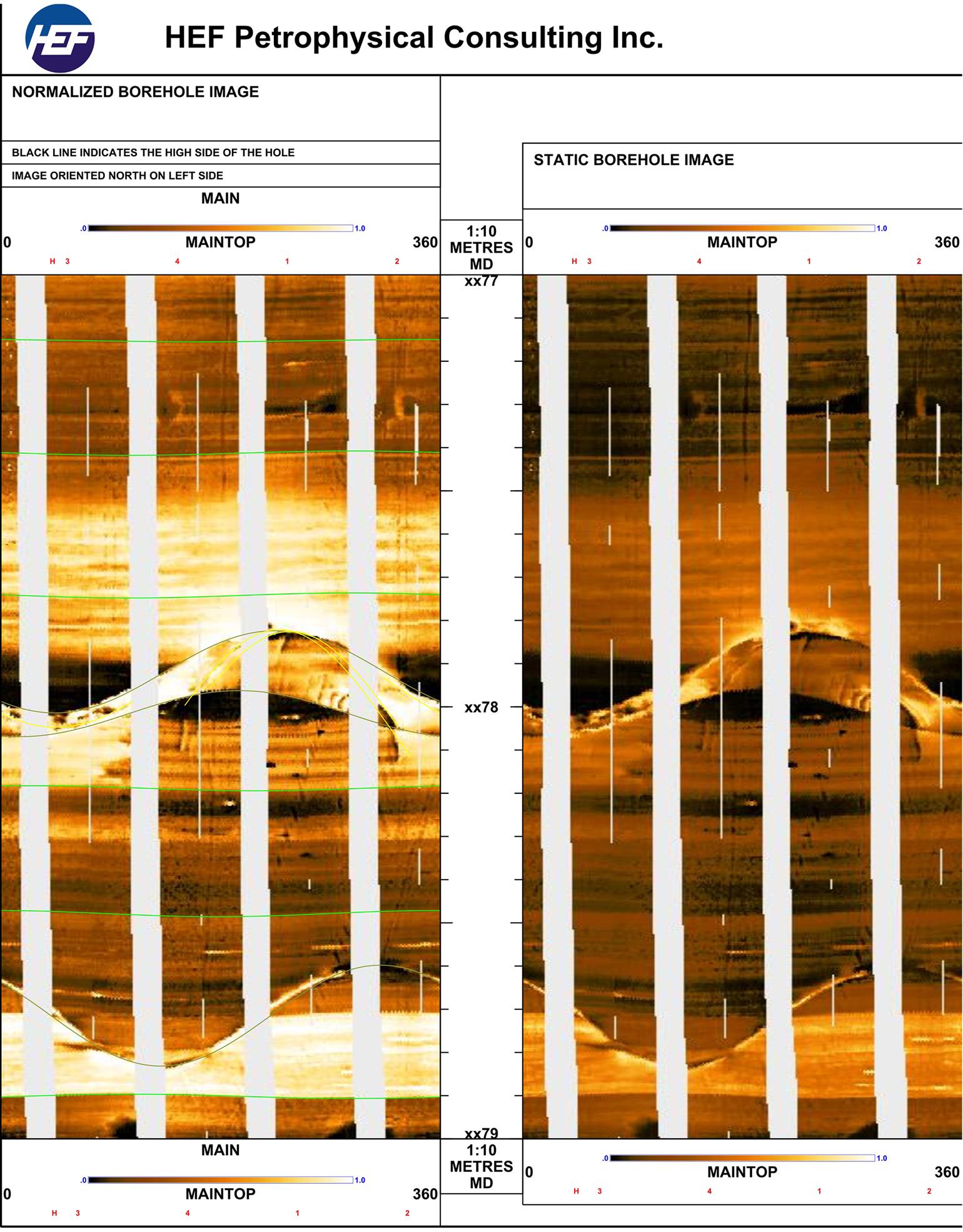
Borehole imaging is the best means of direct fracture characterization and identification in the reservoir. Along with defining single fracture properties such as orientation, more advanced fracture analysis can be computed in conjunction with standard petrophysically-derived calculations. These include fracture aperture, fracture trace length, and population parameters like density (intensity) and connectivity. The various types of fractures that can be present in a reservoir can hinder or amplify the production rates depending on whether they are open, sealed or partially healed, whether they show some offset across them, and their abundance in certain lithologies or structural positions.
It is essential in fracture interpretation to consistently evaluate the differences between fracture types and differentiate what is really a natural fracture from other similar features such as incipient breakout, bit marks and induced fractures of a variety of geometries.
By properly interpreting borehole breakout and drilling-induced fracturing from borehole image logs, the directions of relative in-situ stresses can be evaluated to understand their impact on reservoir properties and performance and borehole stability.
Fracture Density (intensity)
In its simplest terms, fracture density can be expressed in a linear sense as the number of fractures encountered per unit of length, similar to counting the fractures on an outcrop transect. This kind of count density is inappropriate as it does not account for the geometric bias between the intersection line (the borehole) and the fractures (which may be oriented steeply relative to the borehole). The first attempt to account for this is a simple geometric correction commonly called the Terzaghi correction:
Dens = Counted Fractures * 1 / sin(intersection angle)
This kind of linear correction is generally too large and inappropriate for borehole data as the borehole is a three-dimensional volume (not a linear sample). Fractures should be counted in terms of trace length in the borehole per unit of surface area, or up-scaled to account for geometric bias to a volume density where each fracture’s surface area is counted relative to an imaginary volume of reservoir rock around the borehole (Jamison et. al, 2004).
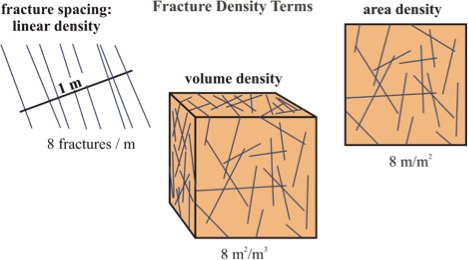
Fracture density block diagrams - Density can be linear, such as a line count on an outcrop (left); two-dimensional, such as a length summation within a defined surface area (right); or, ideally, represents a summation of all fractures in an idealized and well-estimated volume (middle).
We find that this approach falters because of three issues: (1) the image log is sampling a cylindrical volume of rock rather than line, (2) most natural fractures do not cut entirely across the wellbore, and (3) fractures that cross only a minor portion of the wellbore and/or intersect the wellbore at very low angles are difficult to detect on the image logs.
HEF, in conjunction with William Jamison from The Upper Crust, have developed an alternative density correction procedure based on stochastic models of various fracture populations intersected by the wellbore, and which considers only those fractures intersecting at least 50% of the wellbore. Having compared these results with other methods, we have the highest confidence in this particular method.
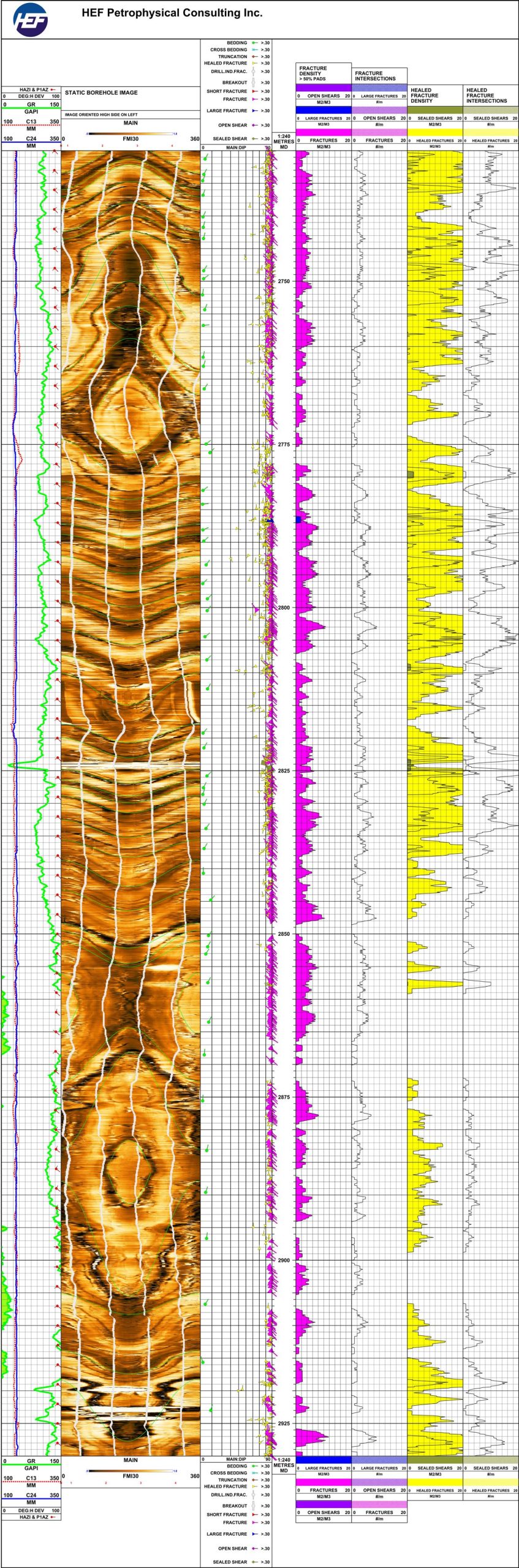
Permeability and stratigraphic interpretation plot - In fields with a large amount of core permeability data, it is possible to develop useful models that take borehole image and other openhole data and use those inputs to predict permeability in three directions (Kv, Khmin, Khmax) Click image to enlarge
Client Testimonial:
HEF has encouraged us to take a much deeper look at the image log data for our McMurray Oil Sands wells. Helping us to see beyond the tadpoles, and to consider what the images tell us about depositional texture, lithology, calculating Vshale and even permeability directions.
-Ian Perry, Geologist, Meg Energy Corp.
Request A Quote
Contact Us
HEF Petrophysical stands by to support you 24 hours a day. Please feel free to email or phone us at any time and we will help you get the answers you need.
