
Stratigraphic Analysis
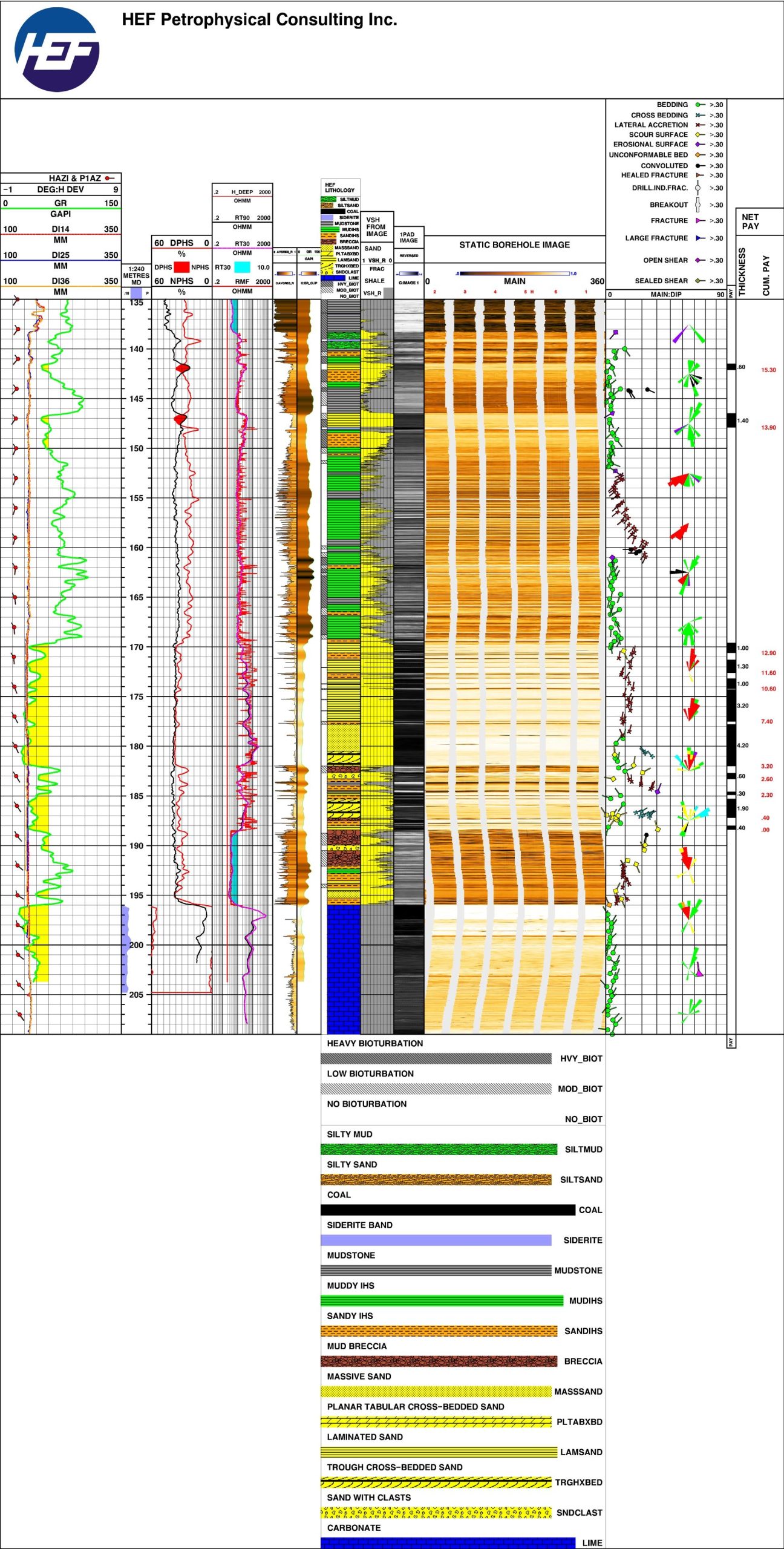
HEF’s stratigraphic analysis and interpretation service offers a high quality, cost effective and prompt approach to detailed and reliable lithofacies interpretations. These interpretations, comparable to core analysis, result from combining detailed image log interpretations with advanced petrophysics. Image logs can also be used to provide a reliable measurement for borehole-scale sand, mud and breccia compositions and geometries.
Derived from hundreds of Canadian Oilsands core and image log comparisons, our stratigraphic analysis has become an integral part of our client’s production well planning and in anticipating production well performance and geology. This analysis, conducted in vertical or horizontal wells which were drilled using conductive or non-conductive mud includes:
- Lithofacies interpretation of composition and depositional texture
- Bioturbation index
- High resolution image-derived shale volume
- Bedform identification of various types of cross-beddings and truncations
- Identification of slumps and other syn-sedimentary deformation structures
- Caprock integrity evaluation
- Permeability and bitumen saturation
Stratigraphic Bedform Classification
HEF identifies scour and erosional surfaces, lateral accretion, unconformities, flow cross bedding, and convoluted bedding in our stratigraphic analysis. These bedforms are used to interpret the depositional environment, allowing you to predict the areas of maximum permeability.
View Dip Type glossary here.
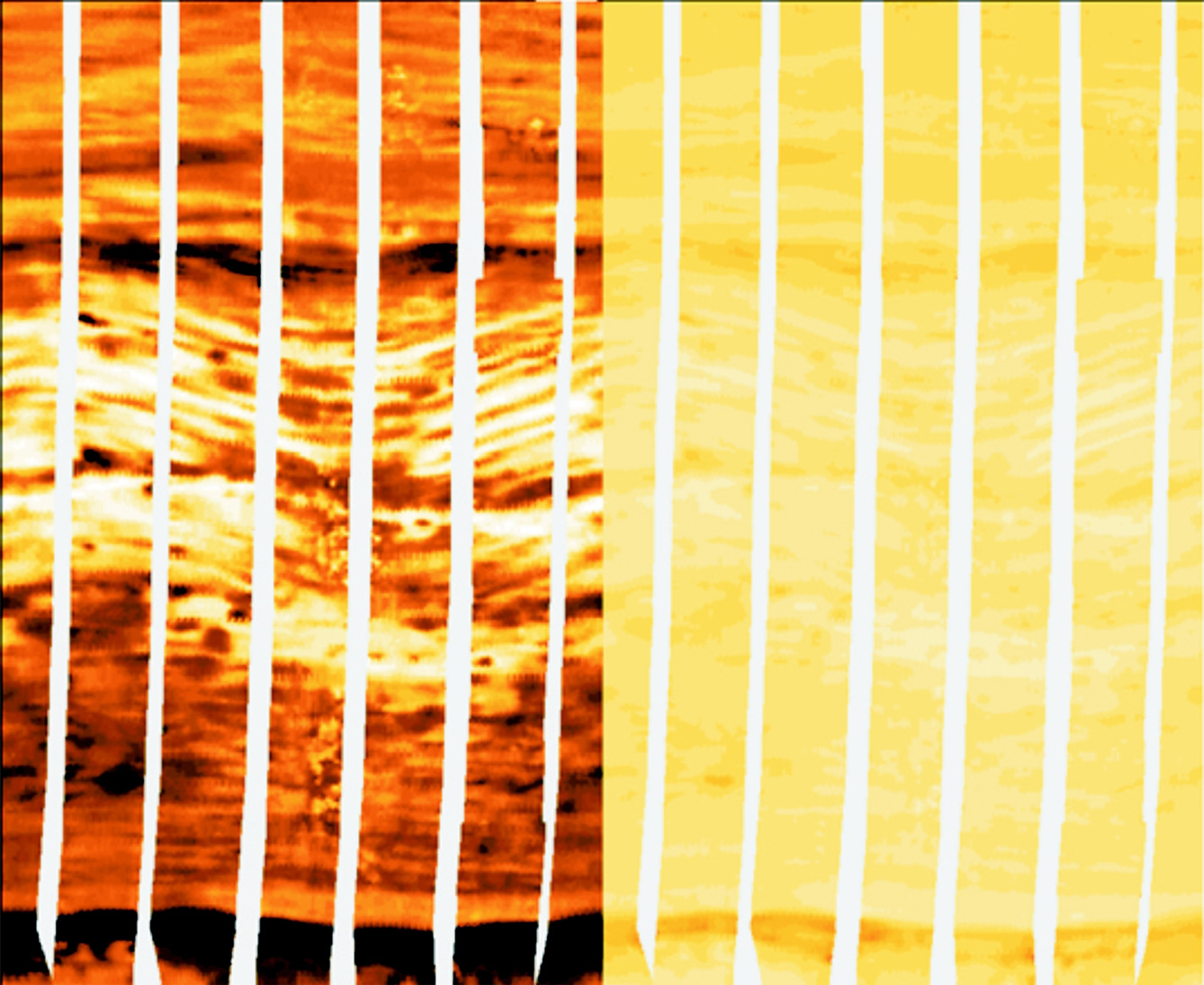
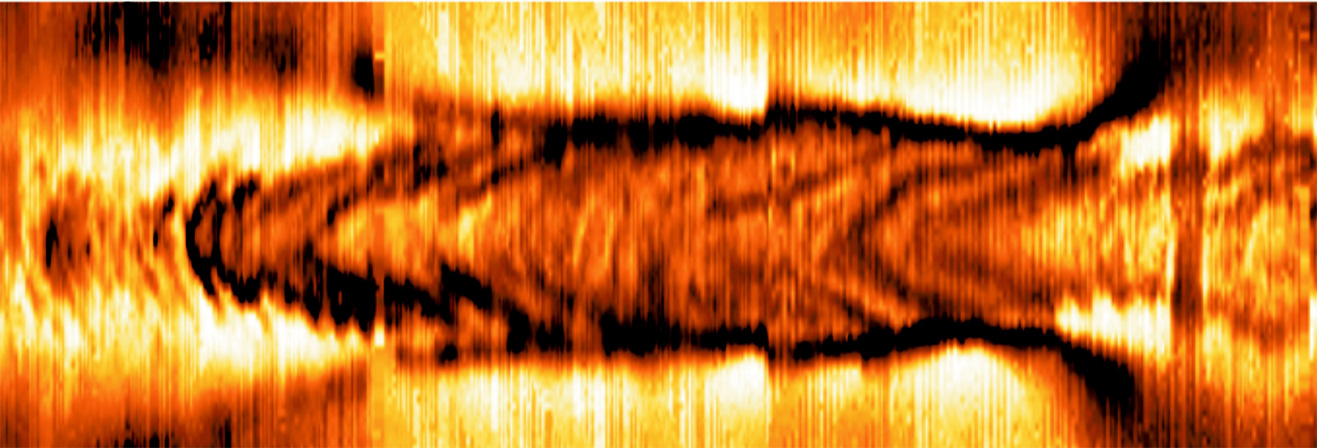
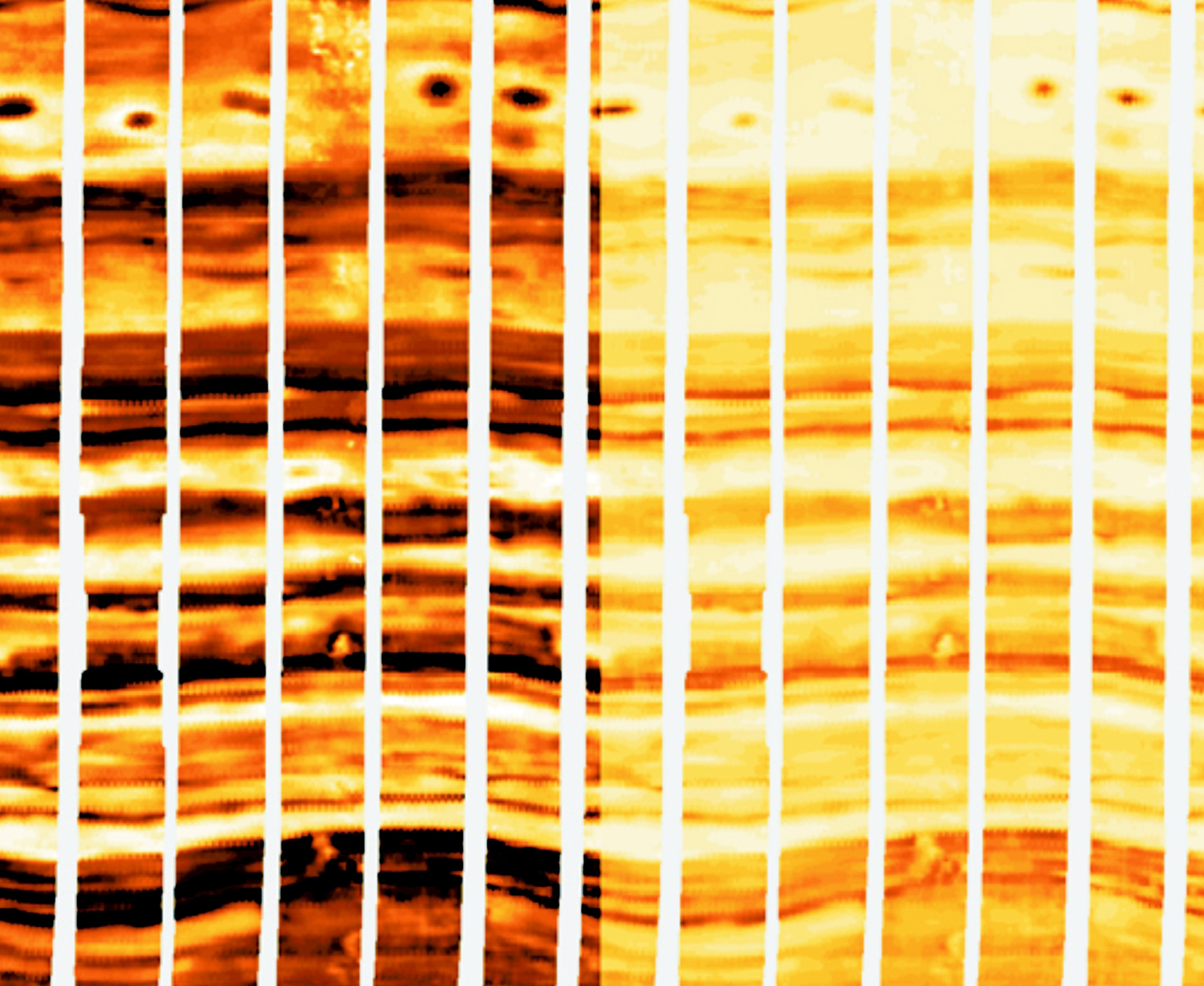
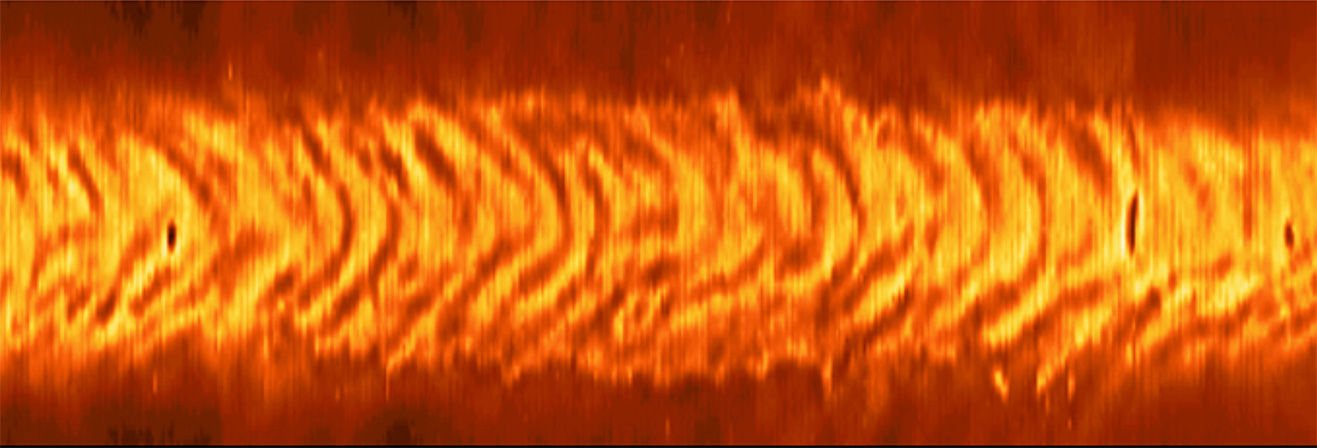
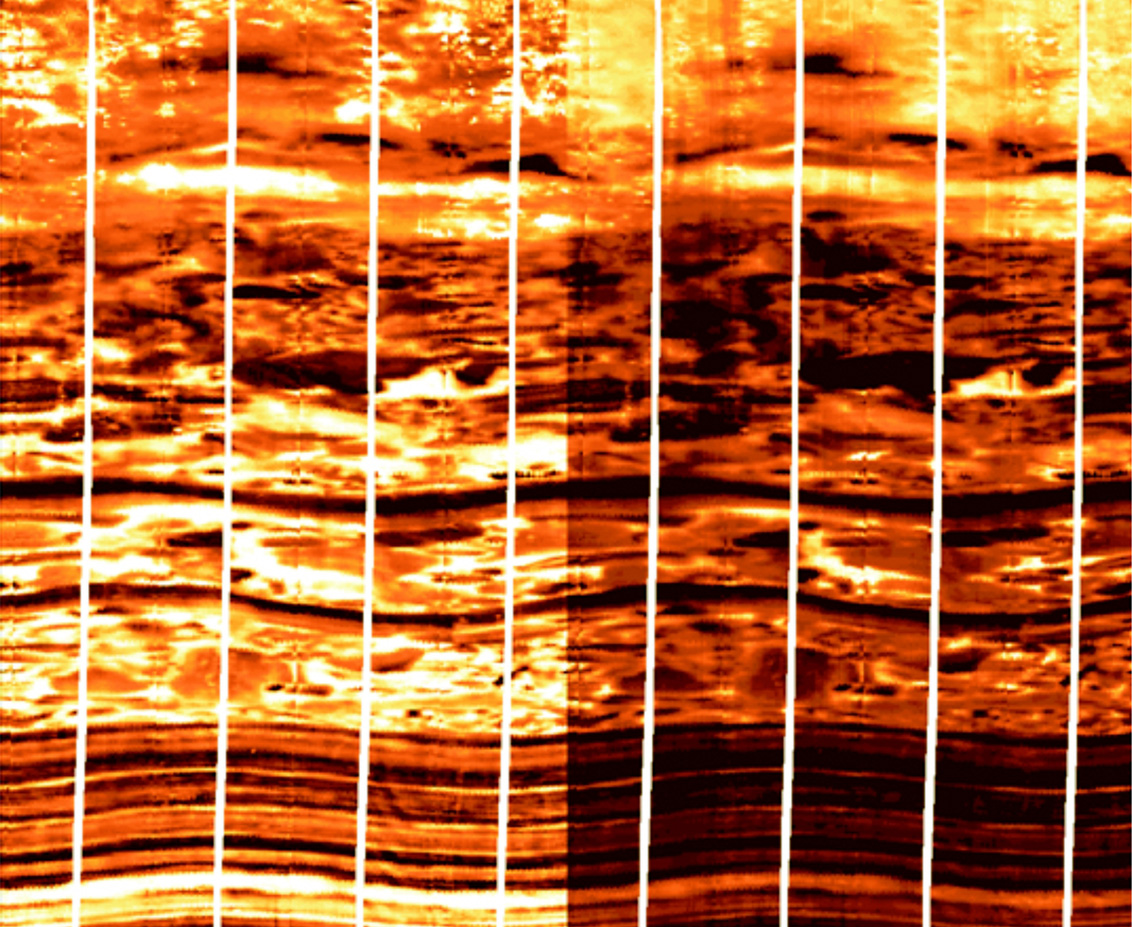
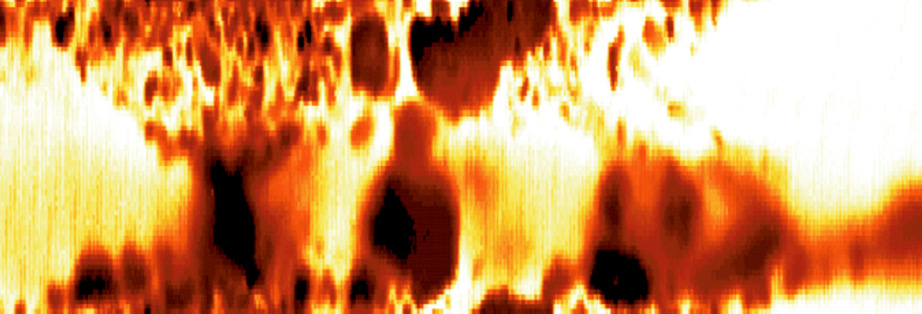
Lithofacies and High-Resolution Vsh Interpretation (Oilsands)
In oilsands and other heterogeneous reservoirs, it is of particular interest to have a continuous log of the nature of the bedding (layered, cross-bedded, interbedded or brecciated) in order to estimate and model steam chamber growth for in-situ steam assisted gravity drainage (SAGD) production. We use log-derived high-resolution shale volume (Vsh) and the image bedding texture as the lithology constraints on our facies interpretation.
In horizontal wells, LWD image logs can be used to differentiate between potential permeability barriers like strong, muddy IHS bedding, brecciated zones and horizontal mud layering, either on the high or low side of the wellbore. The challenge is that without image data (and only a single point gamma ray and resistivity measurements), the aforementioned three reservoir facies can be indistinguishable, while contiguous mud layering can be detrimental to steam chamber growth and production.
Rich Text
This is my rich text.
I am a subheading
This is more rich text.
I am a list
Lists are cool
Horizontal Wells
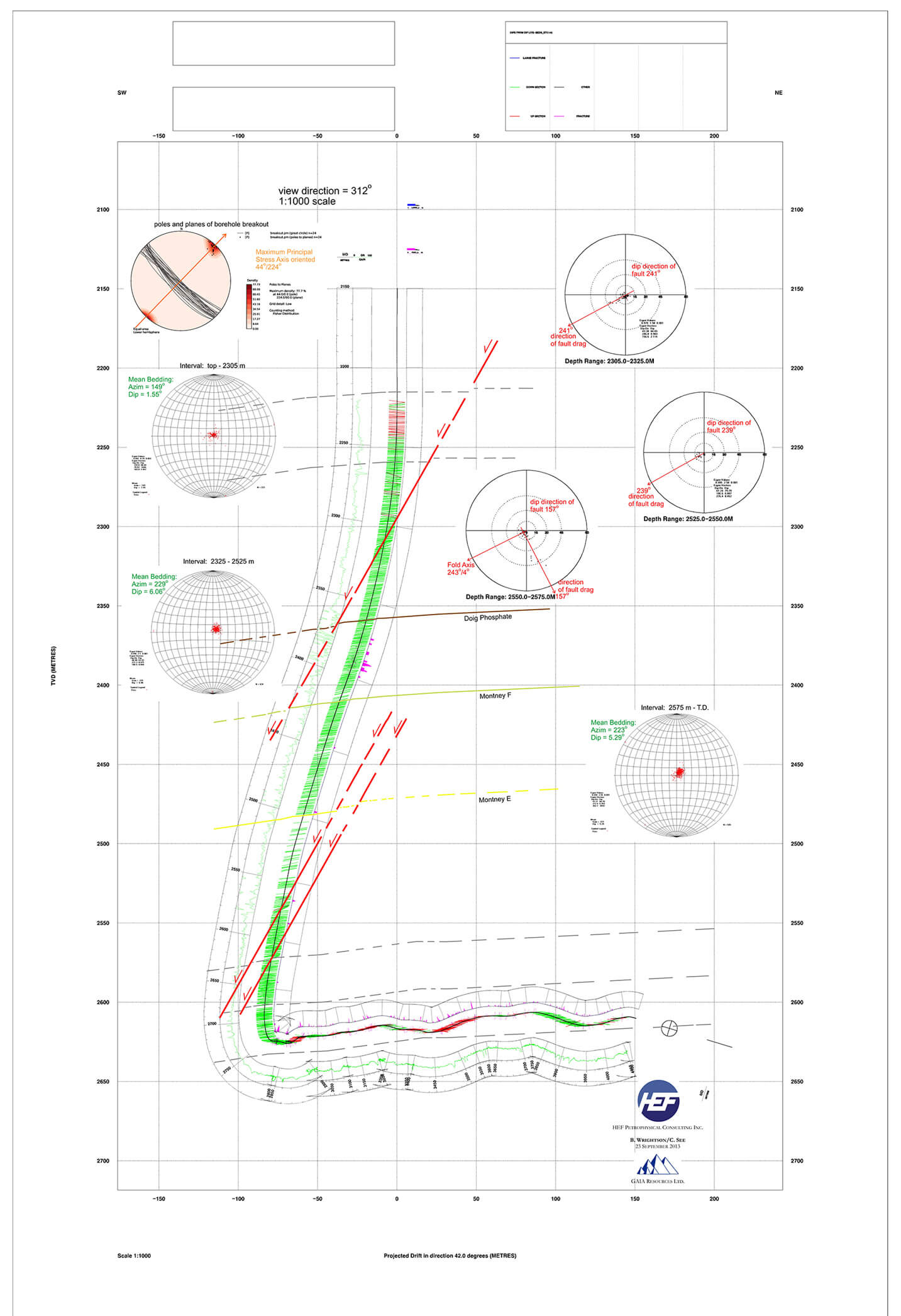
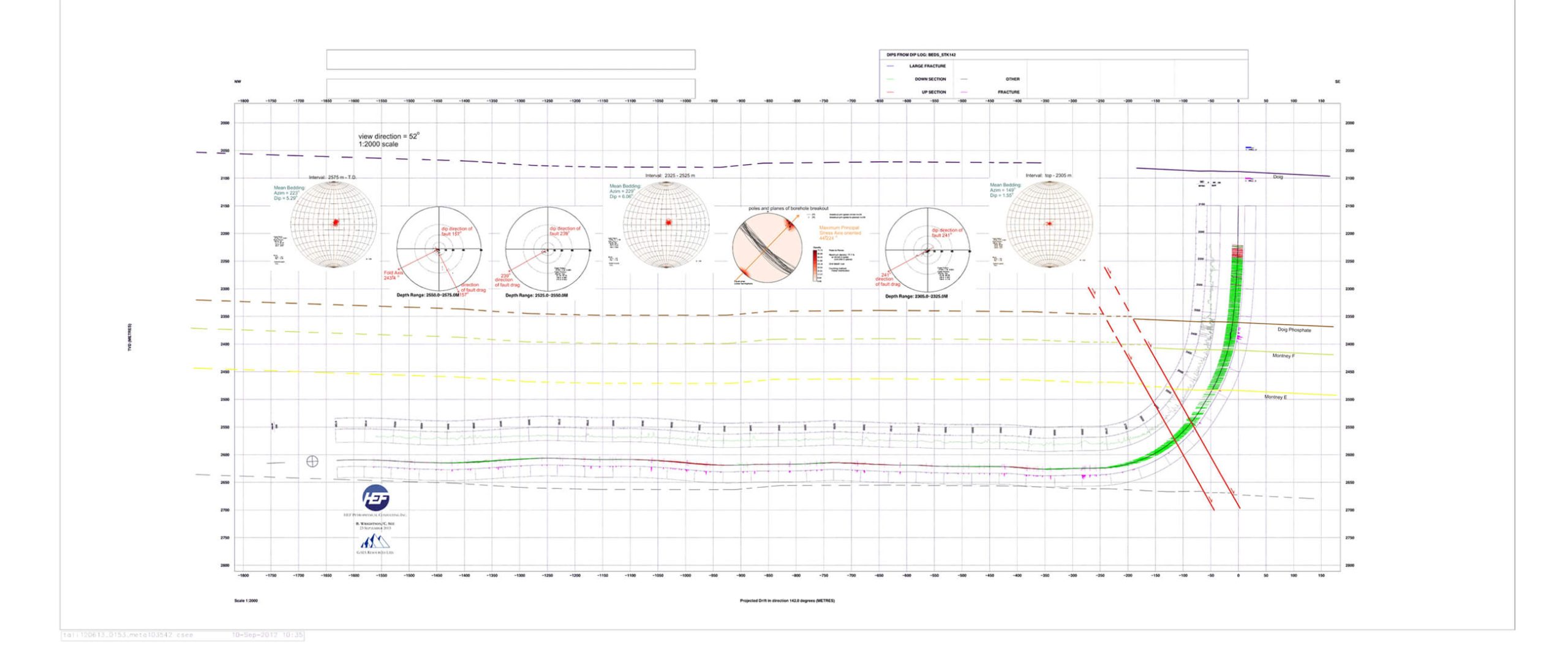
Horizontal wells present unique challenges for structural interpretation. Wellbores can dip in and out of bedding, and bedding can dip in and out of the wellbore due to changes in plunge, minor folds and position on the structure. Very subtle changes in bedding shape can seem larger and more significant than they actually are in true scales because of how stretched a particular bedding feature may be, while significant features like tear faults can be missed by inexperienced interpreters, who might not notice the subtle breaks in the bedding, especially as fracture intensity increases.
TST and Stratigraphic Bed Penetration
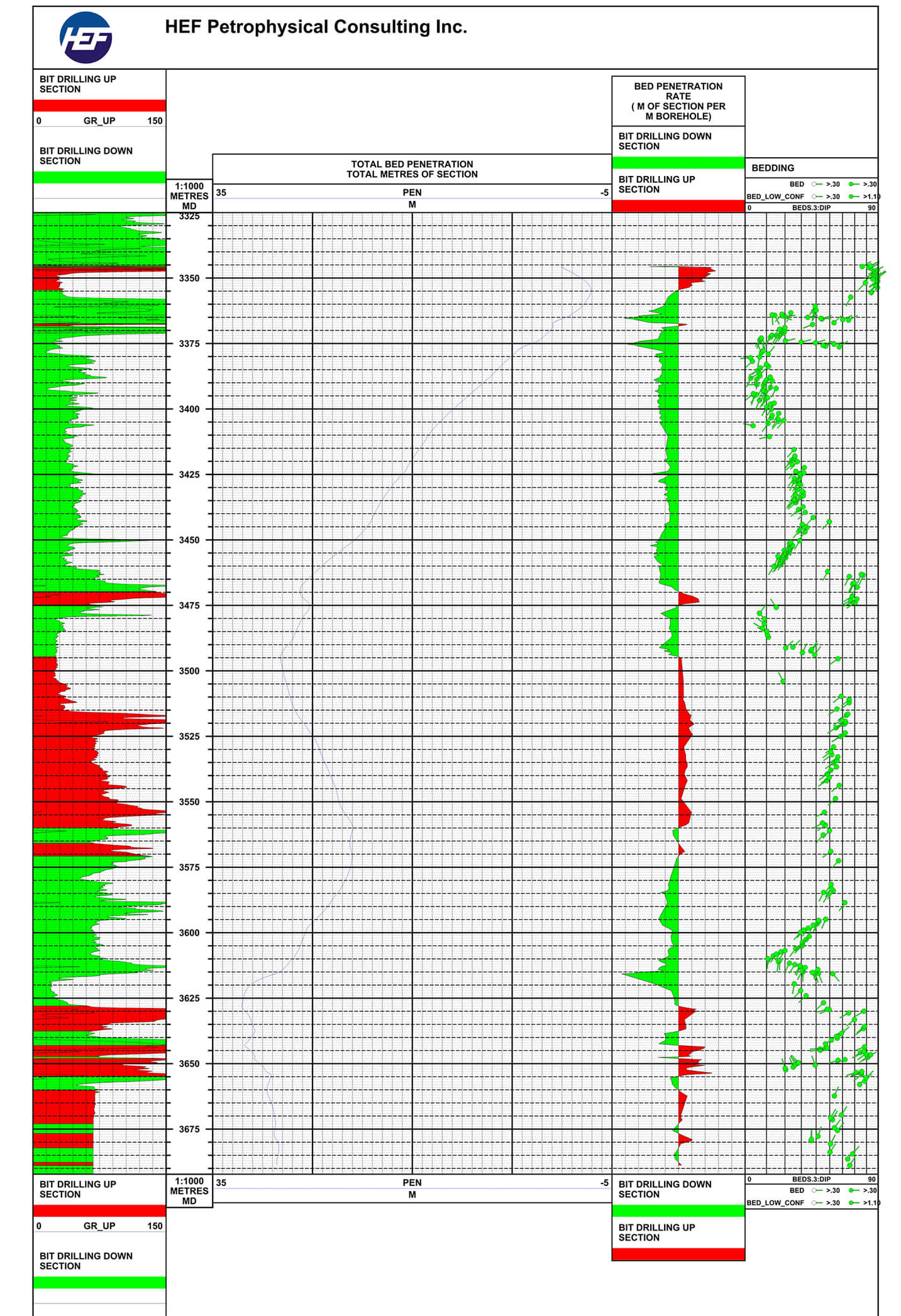
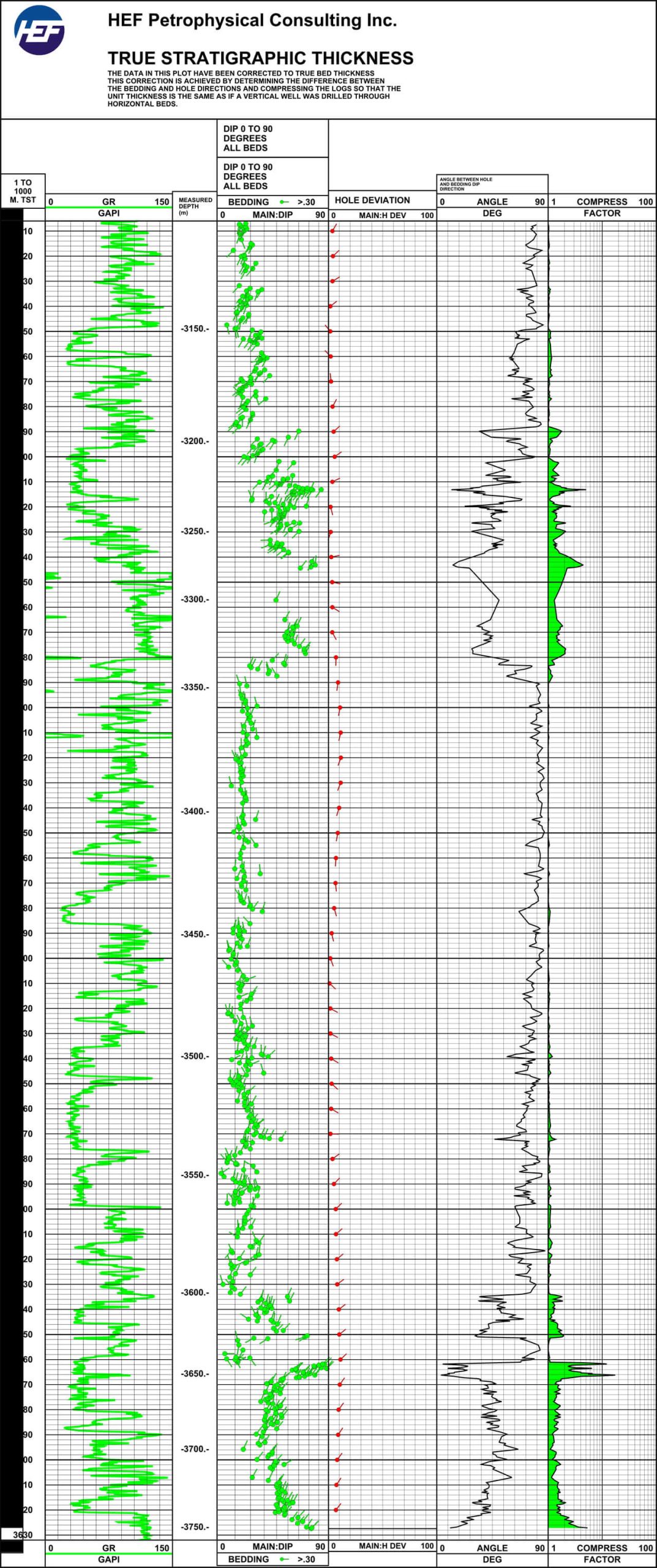
To help you better understand your structurally complex dip data, HEF provides a variety of visualization tools for understanding how wellbores cut through bedding. True Stratigraphic Thickness (TST) plots are used to undo bed “stretching” due to steep bedding and borehole deviations. This allows you to compare gamma ray repeats and correlation of geological sections from faulted and folded wells to offsetting wells with undeformed bedding.
Bed Penetration plots are used in horizontal wells to show the stratigraphic position within a formation. They also indicate the rate the wellbore is going up-section or down-section within the formation.
Client Testimonial:
I wholeheartedly recommend HEF to anyone working on structure plays, naturally fractured reservoirs or the geomechanical datasets associated with Unconventional because they can be counted upon to provide a reliable and neutral third-party assessment of what are often incomplete and complex datasets.
HEF is unique because they have the depth and breadth of experience in a specialization many geoscientists encounter only infrequently. They are able to help clients visualize and communicate their interpretation with the confidence to challenge results.
Approachable, with highest professional standards and integrity, you can expect a quick turnaround and 24 hour on-call support to make sound recommendations to your team and avoid costly errors. Working with HEF on many different projects and in a variety of countries over the past 17 years has been extremely rewarding!
-Catherine Huff, P. Geo.
Request A Quote
Contact Us
HEF Petrophysical stands by to support you 24 hours a day. Please feel free to email or phone us at any time and we will help you get the answers you need.
